
SLO County local news
A Democratic Congress Could Reshape the Central Coast: What the 2026 Election Means for San Luis Obispo County
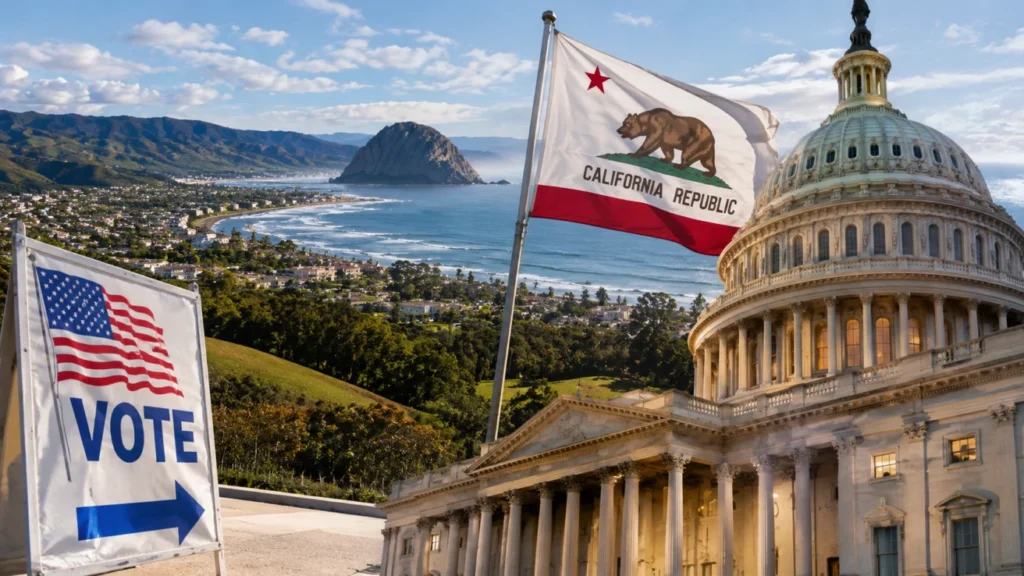
From housing and healthcare to agriculture, energy, military spending and federal funding, a change in congressional leadership could have consequences far beyond Washington.
SAN LUIS OBISPO COUNTY, Calif. — November 3, 2026
Democrats made significant gains in the 2026 midterm elections, putting control of Congress within reach and potentially changing the direction of federal policy during the final two years of President Donald Trump’s second term. While the national attention has focused on which party will control the House of Representatives and Senate, the outcome could carry substantial consequences for communities throughout California’s Central Coast.
For residents of San Luis Obispo County, the effects could reach into everyday household expenses, healthcare coverage, housing development, agriculture, infrastructure investment, environmental protection and the future of major regional employers. A shift in congressional control would also change the relationship between California’s state government and Washington, potentially reopening negotiations over federal programs that have become politically contentious.
The implications extend well beyond party politics. San Luis Obispo County includes agricultural communities, tourism-dependent coastal towns, growing technology businesses, military-related industries, universities and a large population of retirees. Each depends on federal policy in different ways, making the composition of Congress an important economic consideration even for residents who rarely follow national political debates.
A Democratic majority in both chambers would not automatically give the party control over federal policy. President Trump would remain in office, retain veto authority and continue directing much of the executive branch. Senate procedural rules could also prevent legislation from advancing without Republican support. Nevertheless, Democratic leadership could substantially change which bills receive hearings, how federal spending is negotiated and how aggressively Congress oversees the administration.
The following analysis examines what that potential change could mean specifically for the Central Coast.
A New Balance of Power in Washington
The 2026 midterm elections determine which party controls the 120th Congress, beginning in January 2027. Republicans entered the election with control of both chambers, giving the Trump administration a relatively favorable legislative environment during the first half of the president’s second term.
Democratic control of the House would give the party authority over committee leadership, congressional investigations and much of the legislative agenda. Control of the Senate would provide additional influence over federal appointments, judicial confirmations, spending negotiations and legislation.
For California, the significance is particularly pronounced because state leaders and the Trump administration have repeatedly disagreed over immigration enforcement, environmental regulations, healthcare funding, energy development and federal authority.
A Democratic Congress could attempt to reverse or limit some administration policies through legislation and appropriations. It could also use oversight hearings and subpoenas to examine federal agency decisions affecting California.
However, a congressional majority is not equivalent to control of the presidency. The White House would still direct federal agencies, and most major legislation would require either presidential approval or enough congressional support to overcome a veto.
That division of authority could produce significant negotiations, legislative compromises or prolonged gridlock.
For the Central Coast, the practical outcome would depend less on which party celebrates election night and more on what Congress actually accomplishes after taking office.
Housing Affordability Could Become a Major Federal Priority
Housing remains one of the Central Coast’s most persistent economic challenges. Communities such as San Luis Obispo, Atascadero, Paso Robles, Morro Bay, Pismo Beach and Santa Maria have experienced sustained pressure from housing costs, limited available inventory and the difficulty of building homes affordable to local workers.
The consequences extend across the economy. Employers struggle to recruit workers who cannot afford nearby housing, younger residents face obstacles to purchasing their first homes, and retirees on fixed incomes must contend with rising rents, insurance and property-related expenses.
Democratic congressional leaders have generally supported expanding federal affordable housing programs, rental assistance, housing tax credits and financial assistance for first-time homebuyers. A Democratic majority could create additional opportunities to advance those policies, although the final legislation would still require agreement with the president or sufficient bipartisan support.
For San Luis Obispo County, expanded federal housing assistance could potentially benefit local housing authorities, nonprofit developers and municipalities seeking to increase affordable housing inventory.
Federal financing programs could also support housing near major employment centers, including Cal Poly, healthcare facilities, agricultural operations and commercial corridors.
But federal spending alone would not solve the region’s housing shortage. Local zoning, construction costs, water availability, infrastructure capacity and California’s own development regulations would continue to influence how many homes can actually be built.
Republicans have emphasized reducing regulatory barriers, encouraging private construction and expanding energy supplies as ways to lower development costs. Those approaches could also influence bipartisan negotiations.
The central question is whether a new Congress could produce legislation that increases housing supply rather than merely subsidizing already expensive homes.
Healthcare and Medicare Could Affect Thousands of Central Coast Residents
Healthcare may be one of the most immediate areas affected by a change in congressional leadership.
San Luis Obispo County has a substantial population of older adults, retirees and residents who depend on Medicare, Medicaid or subsidized health insurance. Changes to federal healthcare programs can influence household budgets, medical providers and the availability of services throughout the region.
Democrats have generally favored protecting Medicaid funding, expanding access to health insurance and preserving or increasing federal assistance that reduces insurance premiums. A Democratic Congress could seek to restore or strengthen programs affected by earlier budget decisions.
For Central Coast residents purchasing insurance through Covered California, federal decisions about Affordable Care Act subsidies can directly influence monthly premiums and out-of-pocket costs.
For seniors, Medicare prescription drug pricing, coverage rules and the financial stability of healthcare programs remain important considerations.
Hospitals, community clinics and medical practices could also be affected by changes in federal reimbursement rates and eligibility requirements. Rural communities are particularly sensitive to funding changes because healthcare providers often operate with limited financial flexibility.
Republicans have argued that federal healthcare programs require stronger spending controls and reforms to reduce costs, improve efficiency and address fraud. Democrats have warned that some proposed reductions could lead to coverage losses or greater financial pressure on providers.
A divided government would likely force both parties to negotiate over how much the federal government spends and which programs receive priority.
For local residents, the measurable consequences would be changes in premiums, eligibility, prescription costs and access to care, not simply which party controls the committees overseeing healthcare.
Agriculture, Farmworkers and Immigration Policy
Agriculture is one of the Central Coast’s defining industries. From vineyards in Paso Robles to vegetable production in the Santa Maria Valley and agricultural operations across Monterey County, farming supports thousands of jobs and a large network of suppliers, transportation companies, processors and local businesses.
The industry also depends heavily on federal policy.
Immigration enforcement, agricultural worker visa programs, water infrastructure, trade policy and federal farm legislation can all influence operating costs and workforce availability.
A Democratic Congress could seek changes to immigration enforcement priorities and support legislation providing greater stability for agricultural workers and employers. Democrats have generally emphasized protections for established immigrant communities and pathways to legal status, while Republicans have emphasized border security, enforcement and changes to legal immigration programs.
The distinction matters locally because agricultural businesses require a dependable workforce, while immigrant families and communities have expressed concerns about enforcement operations and family separation.
However, immigration legislation has repeatedly proven difficult to pass even when one party controls Congress. With Trump remaining president, sweeping immigration reform would still require significant political compromise.
Farmers would also be watching federal agricultural programs, crop insurance, disaster assistance and trade negotiations. Changes to tariffs or international trade relationships can affect both agricultural exports and the price of imported equipment and supplies.
For Central Coast agriculture, the most meaningful outcome would be a predictable regulatory and labor environment that allows businesses to plan investments and maintain production.
Federal Infrastructure Funding Could Reach Local Roads, Water Systems and Flood Protection
Federal infrastructure spending has already played an important role in Central Coast development. Transportation improvements, water projects, flood protection, broadband expansion and public facilities often depend on a combination of local, state and federal financing.
In September 2026, Rep. Salud Carbajal announced that the House had passed legislation containing more than $66 million for Central Coast water projects. The proposal still required additional legislative action before becoming law.
A Democratic Congress could prioritize similar infrastructure programs, potentially expanding opportunities for communities seeking federal assistance.
San Luis Obispo County has numerous infrastructure needs, including road maintenance, water reliability, wastewater treatment, bridge improvements, wildfire preparedness and broadband access in rural communities.
Communities such as Paso Robles, Atascadero, Templeton and smaller unincorporated areas face different infrastructure challenges than larger urban centers. Rural projects can be particularly difficult to finance because costs are spread across smaller populations.
Transportation funding could also influence improvements along Highway 101, regional transit services and connections between employment centers.
In the broader Central Coast region, flood protection remains especially important following destructive storms in recent years. Federal assistance for levees, drainage systems and emergency preparedness can help reduce future damage to homes, businesses and agricultural land.
The political challenge is that infrastructure spending must compete with other federal priorities. A Democratic majority might favor larger public investments, while Republicans could push for tighter spending limits, streamlined permitting and a greater role for private investment.
Actual local benefits would depend on approved appropriations, agency decisions and the readiness of individual projects.
Diablo Canyon Nuclear Power Plant and the Region’s Energy Future
Few federal policy questions are as directly connected to San Luis Obispo County’s economy as the future of Diablo Canyon Nuclear Power Plant.
Located along the coast near Avila Beach, Diablo Canyon is a major regional employer and an important source of electricity for California. Its continued operation involves federal nuclear regulation, state energy policy, environmental oversight and substantial financial considerations.
In August 2026, federal officials distributed $271 million through the Civil Nuclear Credit Program to support the plant’s extended operations.
A Democratic Congress could influence future federal energy funding and oversight, but the plant’s future would not be determined by party control alone. Decisions involving licensing, safety and operations would continue to depend on regulators, the operator and applicable state and federal requirements.
The issue also illustrates how traditional political divisions do not always translate neatly into local economic interests.
Democrats have generally emphasized reducing greenhouse gas emissions and expanding clean energy. Some support nuclear generation as a source of reliable carbon-free electricity, while others have raised concerns about nuclear safety, waste management and coastal environmental impacts.
Republicans have generally supported maintaining domestic energy production, including nuclear generation, while emphasizing reliability, affordability and reduced regulatory burdens.
For San Luis Obispo County, the practical questions involve jobs, electricity reliability, safety, long-term economic planning and what happens when the plant eventually closes.
A new Congress could affect funding and oversight, but residents should not expect an immediate change in Diablo Canyon’s operating status solely because of the election.
Offshore Wind, Coastal Protection and Energy Development
The Central Coast has also become a focal point in the national debate over offshore wind development.
Federal waters off the California coast have attracted interest for large-scale floating offshore wind projects, with potential economic implications for ports, construction firms, maritime businesses and renewable energy suppliers.
However, the industry has faced substantial regulatory and political uncertainty. In 2026, the Trump administration pursued actions affecting offshore wind leases, including agreements involving projects off California’s coast.
California officials challenged aspects of those decisions, arguing that the changes threatened clean energy investment and jobs.
A Democratic Congress could hold hearings, investigate federal offshore wind decisions and attempt to restore support for renewable energy development. Yet executive agencies would still retain significant authority over federal leasing and permitting.
The economic implications for the Central Coast could be substantial if offshore wind development eventually proceeds, but large projects would still face financing, infrastructure, environmental and regulatory challenges.
Commercial fishing interests, coastal communities and environmental organizations have raised questions about marine ecosystems, fishing access, transmission infrastructure and the visual or economic effects of offshore development.
Supporters argue that offshore wind could create new industries, construction jobs and long-term electricity generation capacity.
Opponents question the cost, environmental consequences and reliability of the technology, particularly when compared with other energy sources.
For local communities, the issue is not simply whether Congress supports renewable energy. It is whether projects can be developed responsibly, financed economically and connected to a grid capable of using the electricity.
Vandenberg Space Force Base and the Growing Space Economy
Vandenberg Space Force Base, near Lompoc, represents another major intersection between federal policy and the Central Coast economy.
The installation supports military space operations, satellite launches and a growing commercial space industry. Its activities generate employment, contractor opportunities and spending throughout northern Santa Barbara County and surrounding communities.
Federal defense appropriations influence military installations, infrastructure investment, personnel and long-term planning.
A Democratic Congress would gain greater influence over defense spending priorities and oversight, but that would not necessarily mean reduced support for Vandenberg.
National security and space capabilities have historically attracted bipartisan support, even when lawmakers disagree about overall defense spending.
Local issues could include funding for launch infrastructure, housing for military personnel, transportation improvements and environmental protections.
The growth of commercial launches has also created concerns about sonic booms, wildlife impacts and disruptions to nearby communities.
Congressional oversight could place greater attention on those effects while continuing to support the economic and national security benefits of space operations.
For the Central Coast, the most important outcome would be balancing growth in a high-value industry with the quality of life of residents living near the installation.
Small Businesses Could See Both Opportunities and Uncertainty
Small businesses form a substantial part of the Central Coast economy. Restaurants, wineries, contractors, tourism operators, professional services, retailers and technology companies all operate within an economic environment shaped partly by federal policy.
A Democratic Congress could pursue changes involving small business lending, tax incentives, healthcare costs, labor standards and federal contracting.
Some business owners could benefit from expanded lending programs, infrastructure investment or incentives for domestic manufacturing and clean energy.
Others might be concerned about increased regulation, labor costs or changes to tax policy.
Republicans have generally emphasized lower taxes, reduced regulatory requirements and incentives for private investment. Democrats have more frequently emphasized worker protections, targeted assistance and public investment.
Neither approach guarantees lower costs for every business.
For a local electrical contractor, federal energy incentives could influence demand for solar installations, electrical upgrades and battery systems. A construction company might benefit from infrastructure funding but face higher labor or material costs. A winery could be affected by international trade policy, agricultural labor availability and consumer spending.
Tourism businesses would be especially sensitive to broader economic conditions because discretionary travel tends to decline when households feel financially pressured.
The most important federal decisions for many small businesses may involve taxes, borrowing costs, trade policy and consumer purchasing power rather than high-profile political legislation.
Cal Poly, Cuesta College and the Future Workforce
Education is another area where federal decisions could affect the region.
Cal Poly San Luis Obispo and Cuesta College play important roles in workforce development, research and the local economy. Students, faculty, researchers and surrounding businesses all depend to varying degrees on federal education programs and research funding.
A Democratic Congress could seek greater support for Pell Grants, student assistance, workforce training and university research.
Federal funding also supports scientific and technological research in areas such as engineering, agriculture, energy and environmental science.
Changes to research grants can influence university hiring, graduate programs and partnerships with private industry.
For students, financial aid policies and loan repayment rules can affect the affordability of higher education.
However, expanding federal student assistance does not automatically reduce tuition or housing costs. San Luis Obispo’s expensive rental market remains a major financial obstacle for many students, regardless of federal aid eligibility.
Federal policy could help address some of those pressures, but local housing supply and university enrollment decisions would remain important.
Social Security, Retirement and Fixed-Income Households
San Luis Obispo County’s sizable retirement population makes Social Security and Medicare policy especially relevant.
A Democratic Congress could seek to protect or expand certain retirement benefits, while Republicans have generally emphasized fiscal sustainability and the need to address long-term federal spending pressures.
Neither party can ignore the financial challenges facing Social Security.
The program’s long-term funding outlook requires congressional attention, and changes to payroll taxes, benefits or eligibility would have substantial consequences for future retirees.
For residents already receiving Social Security, the immediate concerns are often simpler: whether monthly benefits keep pace with housing, food, healthcare and utility expenses.
Congress could debate benefit formulas, taxation of benefits or changes affecting future recipients. However, major reforms would require legislation and would likely face significant political resistance.
For Central Coast retirees, the most useful measure of congressional action would be whether it improves financial security without creating new uncertainty about benefits.
Environmental Protection, Wildfire Prevention and Coastal Resources
Environmental policy has particular significance in a region defined by agriculture, open space, tourism and coastal recreation.
Federal decisions influence wildfire prevention, forest management, public lands, marine sanctuaries, endangered species protections and water resources.
A Democratic Congress could attempt to strengthen environmental oversight and restore funding to certain conservation or climate-related programs.
Republicans have emphasized forest management, vegetation reduction, permitting reform and domestic resource development, arguing that excessive regulation can delay projects and increase costs.
On the Central Coast, these approaches are not always mutually exclusive.
Wildfire preparedness may require both environmental planning and practical vegetation management. Water infrastructure projects must balance ecological concerns with the needs of households and agriculture.
Coastal protection policies also affect commercial fishing, recreation, tourism and development.
A shift in congressional control could influence the funding and regulatory environment for these programs, but the actual consequences would depend on individual laws, appropriations and agency implementation.
California’s Relationship With Washington Could Change
A Democratic Congress could alter the political relationship between California and the federal government.
California has frequently challenged Trump administration decisions involving environmental regulations, immigration enforcement, energy policy and federal funding.
With Democratic leadership in Congress, California officials could gain additional opportunities to raise concerns through congressional hearings and investigations.
Federal agencies might face more questions about funding decisions, regulatory changes and enforcement practices affecting the state.
However, congressional oversight is not the same as executive authority. The administration could continue pursuing policies within its legal powers, and disagreements could shift into courts or budget negotiations.
For California taxpayers and local governments, the result could be either greater protection for certain federal programs or prolonged uncertainty if Washington becomes politically gridlocked.
Could a Democratic Congress Actually Lower the Cost of Living?
The cost of living is likely to remain the issue by which many Central Coast residents judge the election’s consequences.
Housing, groceries, gasoline, electricity, insurance and healthcare have placed sustained pressure on household budgets.
Democrats have argued that expanded healthcare assistance, housing investment and consumer protections can reduce financial pressure. Republicans have argued that lower taxes, deregulation, expanded domestic energy production and spending restraint offer a better path toward affordability.
Both parties face limits on what Congress can accomplish quickly.
Housing costs depend heavily on supply and local conditions. Gasoline prices respond to global oil markets, refining capacity and state policies. Grocery prices reflect labor, transportation, energy, agricultural production and competition. Electricity bills depend on generation, transmission, infrastructure investment and regulation.
Congress can influence these factors, but it cannot simply order prices lower.
Even legislation that reduces costs in one area may increase federal spending or shift costs elsewhere.
For Central Coast residents, the key question is whether new federal policies produce measurable improvements in disposable income, housing access and economic opportunity.
That is a higher standard than simply winning an election.
What Could Prevent Democrats From Delivering Their Agenda?
Even if Democrats secure both congressional chambers, several obstacles could limit their ability to implement major policy changes.
President Trump would retain the authority to veto legislation. Overriding a presidential veto generally requires a two-thirds majority in both chambers, a much higher threshold than an ordinary legislative majority.
The Senate’s filibuster rules can also require 60 votes to advance many major bills, although certain budget-related measures and nominations operate under different procedures.
A narrow Democratic majority could therefore struggle to pass legislation without Republican cooperation.
Federal budget negotiations could become especially contentious. Congress controls appropriations, but the president participates in the legislative process and directs executive agencies.
Disagreements could delay spending bills, threaten government shutdowns or result in temporary funding measures.
For Central Coast communities dependent on federal grants, research funding, infrastructure projects and government services, uncertainty can be costly even when no program is permanently eliminated.
The outcome could be a period of negotiation in which neither party can fully implement its preferred agenda.
That would make bipartisan agreements particularly important for projects with broad local support.
What Central Coast Residents Should Watch in 2027
The first several months of the new Congress will provide a clearer picture of whether the election produces meaningful policy changes.
Residents should watch federal budget negotiations, healthcare subsidy decisions, housing legislation, agricultural labor proposals, energy policy and the future of infrastructure appropriations.
Local governments will be watching for grant opportunities and changes to federal program requirements. Agricultural employers will be watching immigration and trade policy. Healthcare providers will be evaluating reimbursement and coverage decisions. Contractors and renewable energy businesses will be watching federal tax incentives and regulatory changes.
Vandenberg-related businesses will monitor defense spending and space infrastructure investment, while communities around Diablo Canyon will continue following nuclear licensing, operations and long-term economic planning.
These developments will not necessarily occur immediately. Many federal programs operate on multiyear funding cycles, and some policy changes take months or years to reach local communities.
The region’s congressional representatives will also play an important role in advocating for local priorities, regardless of which party controls the White House.
The Central Coast Has More at Stake Than Party Politics
The 2026 election could produce a substantial shift in Washington’s political balance, but its ultimate importance to the Central Coast will depend on decisions made long after the votes are counted.
A Democratic-controlled Congress could place greater emphasis on healthcare assistance, housing investment, environmental oversight and federal support for certain public programs. It could also increase scrutiny of Trump administration policies affecting California.
At the same time, a divided federal government could produce legislative gridlock, delayed appropriations and difficult negotiations over taxes, regulation and spending.
For San Luis Obispo County, the consequences would not be uniform. A policy that benefits one industry could create costs for another. Additional federal funding might support infrastructure and employment, while new regulations could affect operating expenses. Expanded healthcare assistance could reduce household costs, but Congress would still have to determine how programs are financed.
The Central Coast’s economy is too diverse for a change in congressional control to be described as entirely positive or negative.
The real test will be whether federal leaders can address the problems residents encounter every day: finding affordable housing, paying medical bills, maintaining reliable water and electricity, supporting local businesses and creating jobs that allow younger generations to remain in the communities where they grew up.
Election night determines who holds political power.
What happens afterward will determine whether that power produces meaningful results for the Central Coast.
Editor’s Note: This article is a regional policy analysis prepared during the November 3, 2026, midterm election. Democratic gains and the possibility of control of both chambers are discussed in the context of developing election results. Any final determination of congressional control should be based on confirmed race projections and subsequent certification. The potential policy effects described are scenarios, not enacted legislation or guaranteed outcomes. Local examples are based on publicly reported congressional priorities, federal funding announcements and regional economic issues. SLOpulse will update its coverage as election results and the next Congress’s legislative agenda become clearer.
Comments and community engagement live on Reddit rather than on this site.
No Responses